đź“– Book 4: Love Remembers in Silence launches April 26 — pre-order for $4.99 Pre-order on Amazon →

The Complete Saga

All 12 Books

3,200 years of human history. 138 generations. Two competing networks locked in an existential battle over humanity's survival. Explore the complete timeline.

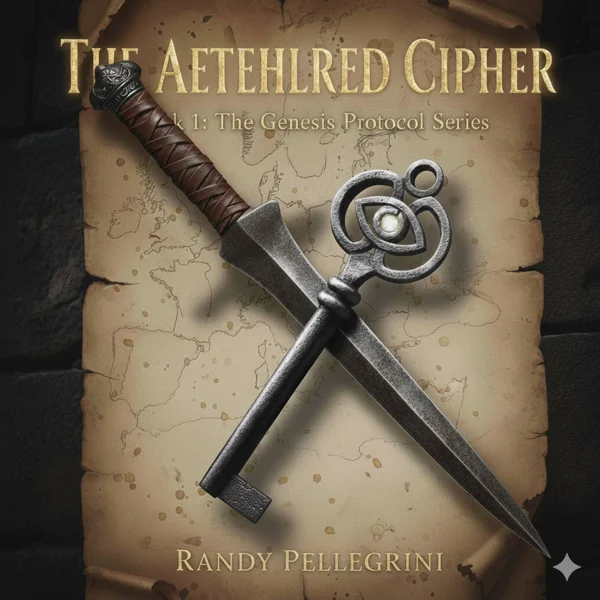
Book 1: The Aethelred Cipher

Medieval Germany, 1347-1350 CE

đź“– Published | ~78,000 words
Time Period 1347-1350 CE
Generation Gen 90
Word Count ~78,000
Status Published (Jan 2026)

When a dying monk named Brother Hamo thrusts an iron key into scribe Thomas of Eltville's hands during a deadly attack by the Order's Gray Robes, Thomas inherits more than an artifact. He becomes the target of a millennia-old conspiracy that has been engineering bloodlines for over 2,500 years.

The Black Death rages across Europe, killing half the population. But Thomas begins experiencing impossible "memories" that don't belong to him—ancient Egyptian hieroglyphs, medical knowledge centuries ahead of his time, and fragments of a genetic protocol designed to preserve human consciousness across generations.

Margarethe, a cloth merchant whose scholar father Heinrich was tortured to death by the Order seven years earlier, recognizes the same pattern when she discovers her family has been part of the defensive network for generations. Together, they must decipher the cipher hidden in manuscript marginalia while the Order's agents close in, determined to recover both the key and eliminate anyone who has accessed defensive knowledge.

Full Plot Summary

The novel opens in Mainz, 1347, as the Black Death arrives a year early. Thomas, a scribe at St. Martin's Monastery, discovers Brother Hamo dying in the scriptorium—murdered by the Order's Gray Robes. Hamo's final act is to thrust an iron key into Thomas's hands, a key that belonged to Thomas's grandfather Wilhelm. The key bears an eye symbol and Hamo's cryptic warning: "The Gray Robes are coming. Hide it. Never let the Order find it."

Thomas escapes through monastery tunnels and meets Margarethe, a cloth merchant working in Mainz's plague-ravaged merchant quarter. She immediately recognizes what Thomas carries—she's been part of the defensive network since childhood, trained by her scholar father Heinrich before the Order tortured him to death seven years earlier. The iron key is one of seven bronze keys that unlock the cipher system hidden in manuscript marginalia across Christendom.

Unlike Thomas, who can read but is learning the cipher for the first time, Margarethe is illiterate but possesses an extraordinary memory. Her father taught her to recognize the geometric patterns of colored dots in manuscript margins—a visual cipher that doesn't require reading the text itself. She becomes Thomas's teacher and protector as they begin deciphering locations, contacts, and methodologies preserved by the defensive network.

As Thomas and Margarethe decode the chronicle, they uncover the Genesis Protocol—a defensive network founded by Egyptian scribe Nefertari during the Bronze Age Collapse. The protocol uses epigenetic markers to transmit survival knowledge across generations through DNA methylation patterns. But there's a competing system: the Order, founded by Amenhotep, believes collapse is inevitable and has spent 2,500 years engineering optimal survivors through selective breeding.

The Order's modern agents—disguised as Church officials and noble advisors—track Thomas and Margarethe across plague-ravaged Germany. The Gray Robes eliminate anyone who spontaneously activates genetic memory without network authorization. The Order views itself not as villainous but as necessary guardians: without centralized control, dangerous knowledge falls into untrained hands.

Thomas and Margarethe race across Europe gathering all seven fragments of the Genesis Protocol with their companion Maria of Toledo, a gifted pattern reader. Thomas experiences full genetic memory cascades—1,200 years of defensive methodology flooding his consciousness simultaneously. He realizes the plague itself is an intelligence test: the Order doesn't cause collapses, they observe who survives naturally and recruit the best candidates. The defensive network's strategy is opposite: distribute pattern recognition methodology so broadly that collapse becomes survivable for everyone.

Thomas must choose: destroy the chronicle to prevent the Order from recovering it, or preserve it knowing future generations will need the genetic activation keys it contains. Margarethe realizes her engineered bloodline gives her advantages Thomas lacks—resistance to trauma, enhanced memory retention—but also makes her the Order's priority target.

The novel ends eighteen months after the quest begins. Thomas, Margarethe, and Maria settle in a Welsh village, teaching village children pattern recognition disguised as simple literacy. Thomas copies the complete Protocol into manuscript copies and distributes them across Europe, making the knowledge impossible to destroy. Margarethe and Thomas marry and have their first child—a son they name Wilhelm, after Thomas's grandfather who first gave him the iron key.

The defensive network survives the Black Death scattered but intact. Their descendants—including Maria's son Rafael who carries the bloodline to China—will resurface across the next seven centuries, each generation receiving fragments of memory until Book 2's Sarah Chen completes the circle 670 years later.
★★★★★ 4.8 out of 5 — 59 ratings on Amazon Read reviews →

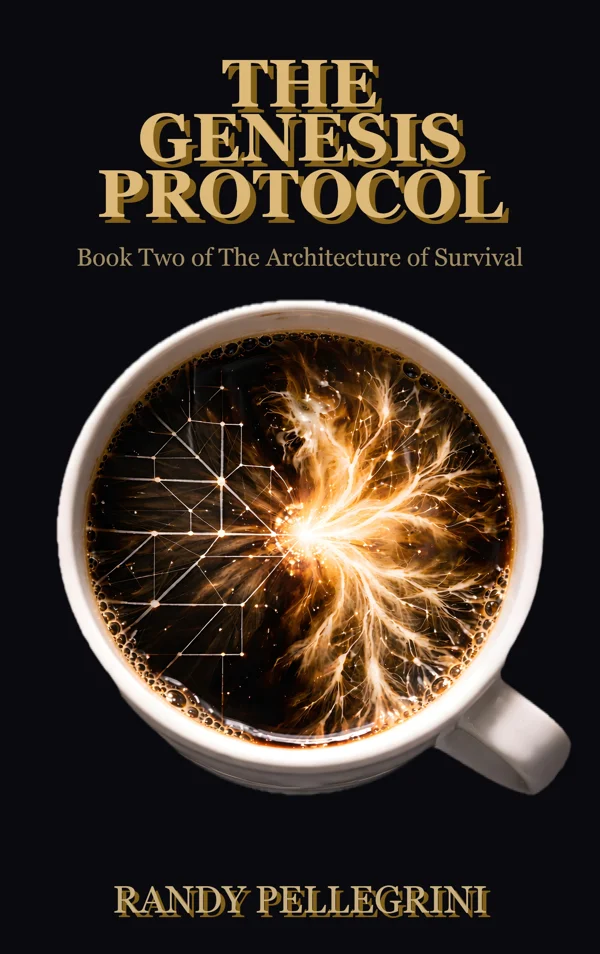
Book 2: The Genesis Protocol

Modern Era, 2019-2025 CE

đź“– Published | 75,000 words
Time Period 2019-2025 CE
Generation Gen 107
Word Count ~75,000
Status Published

When geneticist Dr. Sarah Chen discovers an engineered bioweapon hidden inside GenVault Corporation's laboratories, she has forty-three seconds to escape the building before security locks down. What she carries out—Morrison's classified archive—is proof that THRESHOLD, a program designed to reduce the global population by four billion, is real and already deployed.

Dr. James Morrison, GenVault's head of research, built THRESHOLD after his daughter Emily's death convinced him that humanity's next collapse was inevitable. His solution: engineer a targeted pathogen and deploy it through forty-seven hubs worldwide. Catherine Wells—his superior, a descendant of the Order's three-thousand-year bloodline—has been managing Morrison and the program from the shadows.

Recruited by FBI Agent Torres and working alongside coworker Dr. David Lagos, Sarah races to prevent the remaining forty-six hubs from activating after Hub 47 in Kunming goes live. But stopping the weapon is only half the problem. The government's response—a classified NDA that silences Sarah permanently under the Espionage Act—means the world will never know the pandemic was engineered. Sarah must choose between justice and the math that says silence saves more lives than truth.

Full Plot Summary

The novel opens in November 2019 with Sarah Chen working at GenVault's headquarters, where she discovers an impossible pattern in the company's classified genomic data. Her investigation triggers a security lockdown—she has forty-three seconds to escape the building with Morrison's archive before the doors seal. She makes it out with the evidence that proves THRESHOLD is real.

FBI Agent Torres recruits Sarah to help the government understand what GenVault has built. Dr. James Morrison, the architect of THRESHOLD, is a sixty-three-year-old virologist whose daughter Emily died at age seven from a genetic condition. Emily's death broke something in Morrison—he became convinced that humanity's population had exceeded Earth's carrying capacity, and that a controlled reduction was the only path to survival. He spent thirty years building the most sophisticated bioweapon in history.

But Morrison isn't the true power at GenVault. Catherine Wells—née Weissmann, granddaughter of Otto Weissmann, a Nazi eugenicist who was extracted through Operation Paperclip—is the Order's operative. She has been managing Morrison the way her grandfather managed Nazi scientists: identifying men whose personal loss made them controllable and whose talent made them useful. The company Otto founded became GenVault. Three generations of the Weissmann bloodline, three thousand years of the Order.

Dr. David Lagos, Sarah's coworker at GenVault, serves as the human bridge between Sarah and Morrison, negotiating Morrison's cooperation while investigating GenVault's infrastructure. Lagos is captured by Wells's operatives but survives captivity, emerging with crucial intelligence about the Order's network.

The crisis escalates when Hub 47 in Kunming, China activates—the first of THRESHOLD's forty-seven deployment sites. The engineered pathogen begins spreading. Sarah, working with the FBI and intelligence agencies, leads a coordinated global operation to identify and neutralize the remaining forty-six hubs before they can activate. The raids span multiple countries and time zones, a distributed strike against infrastructure hidden inside legitimate pharmaceutical supply chains.

They succeed—forty-six hubs neutralized, four billion lives saved. But Hub 47 is already spreading. The pathogen Morrison engineered is now a global pandemic, and the world believes it emerged naturally. The classified truth means hospitals operate with wrong models, governments implement policies based on false assumptions, and the death toll climbs higher than it should.

In the aftermath, the government presents Sarah and Dr. Lagos with a fifty-three-page NDA. Seventy-five years of silence. The Espionage Act if they break it. Sarah signs because the math says disclosure would cause more harm than silence—nations would lose faith in pharmaceutical infrastructure, vaccine development would stall, and millions more would die. But she builds a dead man's switch: Morrison's archive encrypted and scheduled to send to journalists, Senate staffers, and the WHO if she's ever unable to cancel the timer.

Sarah navigates the pandemic years under the NDA's constraints—unable to tell anyone the truth, but finding ways to help sideways. She publishes anonymous papers with corrected transmission parameters. She steers colleagues toward better models through implication rather than disclosure. She watches the world struggle with a crisis whose true nature is classified.

Morrison, in federal detention, cooperates fully—writing 847 pages of classified testimony documenting THRESHOLD's architecture, the Order's history, and Wells's role. But his coffee starts tasting chemical. A new guard transfers in the same month. His heart condition accelerates unnaturally. Morrison's own elimination protocol—slow degradation mimicking natural illness—may be turning inward. He dies of an apparent heart attack nineteen months into detention, his testimony incomplete.

Meanwhile, GenVault's surviving board—those who genuinely didn't know about THRESHOLD—votes to pivot the company toward developing a vaccine. The same genomic platform that built the weapon is uniquely positioned to build the cure. The company that caused the pandemic becomes the company best positioned to end it. The institution survives by making itself necessary.

The novel ends five years after the outbreak. Sarah is at MIT, teaching pattern recognition to graduate students who will never know where their professor's expertise really comes from. The pandemic is receding. GenVault's vaccine has saved millions. Morrison is dead. Wells has disappeared. And Sarah carries the weight of silence—the knowledge that the math was right, that silence saved more lives than truth, and that being right about the math doesn't make it acceptable.

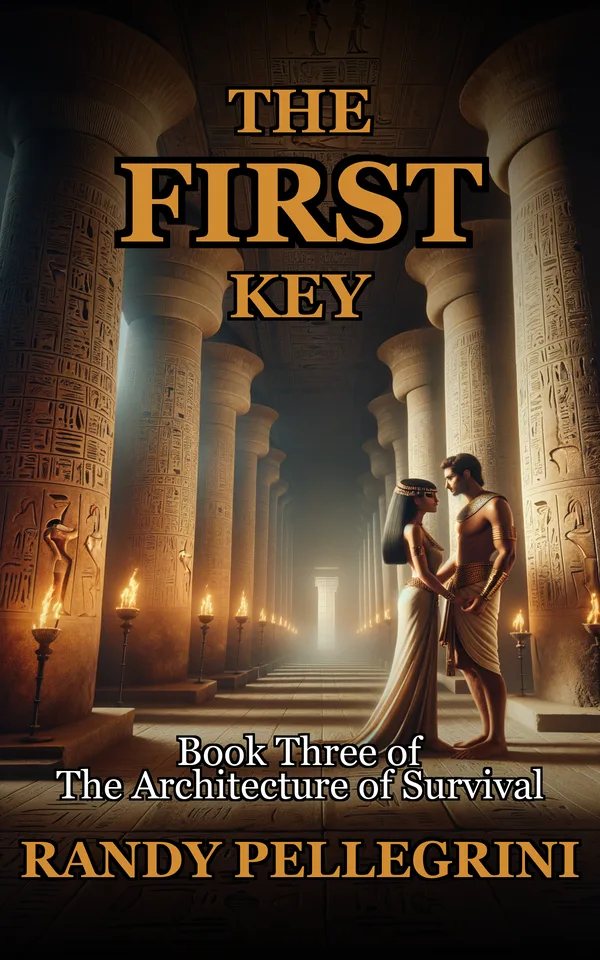
Book 3: The First Key

Bronze Age Egypt to Classical Athens, 1177-335 BCE

đź“– Published | ~65,000 words
Time Period 1177-323 BCE
Generation Gen 0-42 (Founders to Alexander)
Word Count ~65,000
Status Available now

1177 BCE. The Bronze Age Collapse is accelerating. Cities are burning across the Mediterranean. Trade networks are failing. Literacy is vanishing. Nefertari, royal physician and scribe, sees what others miss: the collapse isn't random — it's systemic cascade failure, and it will happen again.

When Pharaoh Tausret dies from fever during the refugee crisis, her deathbed request launches Nefertari's life work: preserve the knowledge in blood. Working with her colleague and lover Amenhotep, Nefertari creates the Genesis Protocol — seven bronze keys encoding collapse recognition patterns. Tausret's twelve-year-old daughter Tirzah chooses to become the first "living key," the bloodline carrier whose descendants will include Sarah Chen 82 generations later.

But Amenhotep sees the same evidence and reaches the opposite conclusion: if traits can be inherited, selective breeding becomes the answer. Their philosophical split — and the end of their love — creates two competing networks that will chase each other through 3,200 years. The Order is born.

Full Plot Summary

The novel opens in 1177 BCE as Nefertari witnesses the Bronze Age Collapse firsthand — refugee camps outside Pi-Ramesses, failing grain supplies, Hittite cities burning. Where other scribes see disconnected disasters, Nefertari sees the underlying pattern: cascade failure across interconnected systems. When Pharaoh Tausret dies from fever contracted in the refugee markets, her deathbed request transforms everything: "Preserve the knowledge. Make it genetic. Make it bloodline."

Working in the temple archives, Nefertari and Amenhotep create the Genesis Protocol: seven bronze keys encoding collapse recognition patterns. But their shared purpose fractures over methodology. Nefertari believes in distributed knowledge — scatter the keys, embed the patterns in bloodlines, let the network grow through discovery. Amenhotep believes in concentrated control — selective breeding, engineered survivors, a managed bloodline that rebuilds faster when collapse comes.

Their final confrontation splits the seven keys. Nefertari takes four defensive keys (Living Key, Pattern Eye, Memory Bridge, Distribution Network). Amenhotep takes three offensive keys (Blood Register, Catastrophe Clock, Culling Method). Tirzah — Tausret's daughter, age twelve — names herself after the Canaanite word for "delight" and transforms the burden of being a living vessel into a gift she chooses freely.

The novel follows the bloodline across 842 years and thirteen chapters, each a different generation confronting the same questions: When does a carrier kill to protect the network? What happens when genetic memory overwhelms the person carrying it? Can a philosophy survive when the people carrying it are flawed?

Tirzah teaches her son Ephraim the Protocol's purpose in Canaanite hill country (1155 BCE). Nefertari dies at 80 in Byblos, watching her distributed network hum without her (1130 BCE). A Mycenaean scribe named Taharqa flees palace collapse with 217 refugees and finds the network already waiting (1100 BCE). Shiphra murders Solomon's overseer and forces the network to confront its first ethical crisis (967 BCE). Miriam uses pattern recognition to prevent a succession war (900 BCE).

During the Assyrian siege of Jerusalem (701 BCE), the prophet Micah — a diluted carrier — dies from plague in the camps, and carrier Tamar becomes the first to question whether the whole enterprise is worth the cost. In Babylon (573 BCE), Rachel's genetic memory overwhelms her with dreams of a city that no longer exists, while the offensive network discovers the Pattern Eye vault in Solomon's Temple — empty. The defensive network moved it before the siege.

At Delphi (550 BCE), carrier Kleomenes discovers the Oracle herself is a carrier — Aristonike, whose genetic memories are dissolving the boundary between her own childhood and her ancestors'. She confuses a pomegranate garden in Greece with one in Pi-Ramesses. Egyptian words arrive for fruits she knows in Greek. The price of carrying 600 years of accumulated memory is losing track of which memories are yours.

At Thermopylae and Salamis (480 BCE), defensive carrier Aristodemos and offensive carrier Artemisia fight on opposite sides of the Persian Wars — bound by a compact that prevents carrier-on-carrier killing. Aristodemos survives and returns to Sparta branded a trembler. The shame is louder than the Protocol's command to survive, and he chooses to die at Plataea.

In Athens (399 BCE), carrier Callias discovers that Socrates isn't a carrier at all — just brilliant. The real carrier is a potter named Xanthe who refuses recruitment, choosing philosophy over genetic privilege. Callias envies her the way a man born in prison envies someone who visited voluntarily and decided to leave. The offensive network, realizing that ideas spread faster after a martyr's death, votes to breed an ultimate conqueror-carrier.

The novel culminates with Theophrastus and Alexander the Great (343-323 BCE). Alexander — bred by the offensive network — bonds with Theophrastus at sixteen in the gardens of Mieza, confessing he was "made, not born." Twenty years later, Theophrastus watches Alexander die at thirty-two in Babylon, mourning the boy he knew, not the conqueror the breeding program produced. Both networks claim the experiment as evidence for their philosophy. Neither is definitively right. The Order draws its first institutional breath, and the chase continues.

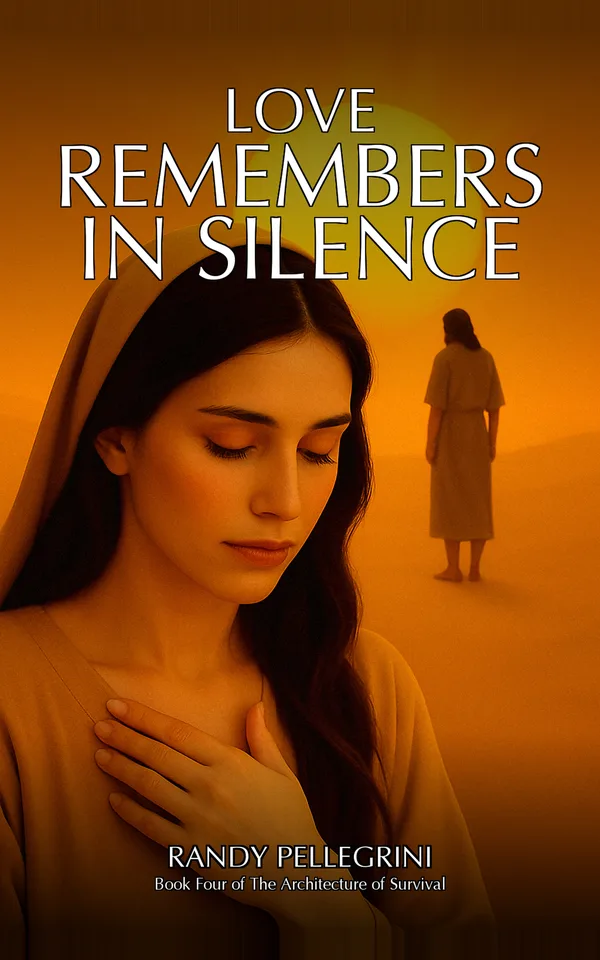
Love Remembers in Silence book cover

Book 4: Love Remembers in Silence

Roman Judea, 26-42 CE

đź“– Pre-order now | Releases April 26, 2026 | ~82,000 words
Time Period 26-42 CE
Generation Gen 42
Word Count ~82,000
Release Date April 26, 2026

She counted things when she was afraid. Salt barrels. Contracts. The breaths of a dying man on a cross.

Mary of Magdala is a merchant's daughter with a merchant's mind — and visions she cannot explain. Since childhood, she has dreamed of a burning city twelve centuries gone, a woman physician working through the collapse, names she shouldn't know in languages she's never learned. Her community calls it possession. A carpenter from Nazareth calls it inheritance.

When Mary joins Jesus's teaching movement, she discovers she is not mad but part of something far older — a chain of women and men who have carried knowledge across civilizations, protecting it through every collapse. Now, with Rome tightening its grip on Judea and the Temple demanding Jesus's arrest, Mary must build a network of women teachers strong enough to survive what she can see coming: the execution of the man she has worked beside for five years, and the slow erasure of her name from the story he leaves behind.

A literary reimagining of the woman at the center of the Jesus story — not the penitent of tradition, but the merchant, the teacher, the organizer, the one who stood at the cross when the men could not, and who wrote the Gospel the world would bury for two thousand years.

Book 5

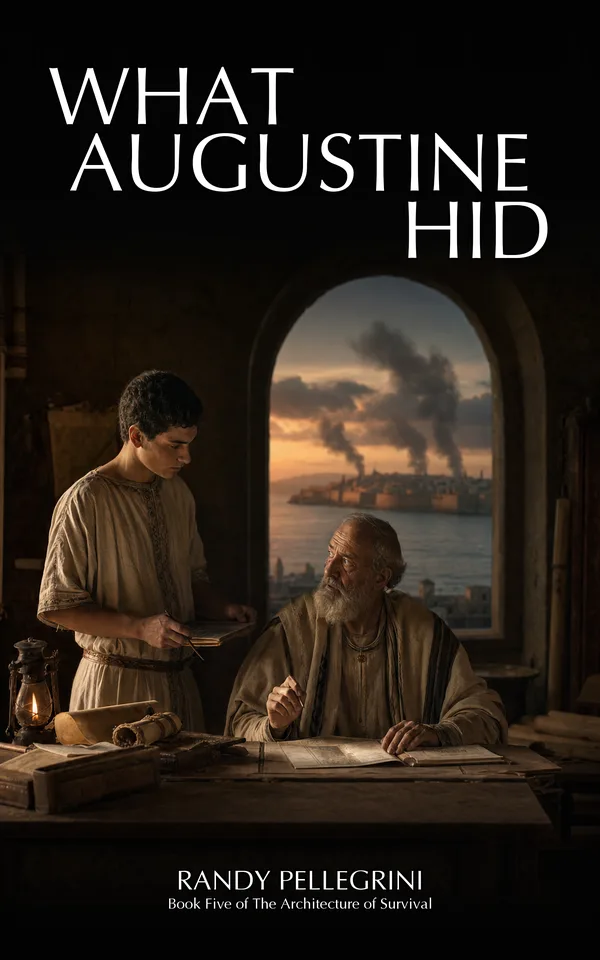
Book 5: The Augustine Protocol

Late Roman Empire, 312-476 CE

đź“‹ Outlined | Target: 120,000 words
Time Period 312-476 CE
Generation Gen 50
Word Count Target: 120,000
Status Outlined

As Rome collapses, Augustine of Hippo—descendant of Titus Publius Scipio—discovers the offensive network controls Church doctrine. He must encode the defensive Protocol in Christian theology acceptable to orthodoxy, preserving the methodology through Dark Ages while making its meaning impossible to decode.

Augustine's mother Monica was a defensive network operative who guided his education. Jerome controls the biblical canon and translations for the offensive network. Constantine's Edict of Milan has made Christianity the Imperial religion, and both networks battle for control of Church doctrine. Augustine's masterwork, City of God, encodes the defensive Protocol as theology: "Two Cities" represents the two networks locked in their 1,400-year war.

He succeeds in preservation but fails in clarity. The defensive methodology survives through monastery systems, but its meaning is lost for 500 years. The practice continues without understanding—until a Carolingian monk discovers strange patterns in manuscripts.

Full Plot Summary

Act One: Discovery (386-400 CE)

Augustine of Hippo converts to Christianity and becomes a brilliant theologian. The defensive network reveals his heritage—he's a descendant of Titus Publius Scipio, the Roman centurion who witnessed Jesus's crucifixion. His mother Monica was a defensive network operative who carefully arranged his education to prepare him for this moment.

The problem: Jerome controls the biblical canon, translations, and orthodoxy for the offensive network. Constantine's Edict of Milan has made Christianity the Imperial religion, and both networks are now battling for control of Church doctrine. Augustine must work within the Church to preserve the defensive Protocol without being martyred as a heretic.

Act Two: The Encoding (400-426 CE)

Augustine writes City of God, his masterwork that encodes the defensive Protocol as theology. "Two Cities" (City of God vs. City of Man) represents the two networks—defensive vs. offensive—locked in their ancient conflict. The grace vs. free will debate encodes genetic memory vs. individual choice. Predestination doctrine disguises bloodline tracking as theology.

His Confessions is a memoir encoding genetic memory techniques as spiritual practice. The Pelagian Controversy isn't really about theology—it's network warfare between Jerome's faction and Augustine's defensive operatives.

Augustine establishes monasteries as defensive network safe houses across North Africa and Europe. The seven bronze keys are distributed to European monastery foundations, hidden in plain sight as religious artifacts.

Act Three: Rome's Fall (426-476 CE)

Rome collapses to Goths, Vandals, and Huns. Augustine dies in 430 CE during the siege of Hippo, but ensures the defensive methodology is preserved in monastery practice. The Dark Ages begin, and Jerome's faction controls Church orthodoxy.

The unintended consequence: monks preserve the practice without understanding its meaning. They copy manuscripts with marginal annotations, coordinate marriages through Church records, and maintain bloodline documentation—but the defensive methodology's true purpose is lost.

Epilogue (850 CE): During the Carolingian Renaissance, a monk discovers strange patterns in manuscripts and begins to decipher the Aethelred Cipher.

Book 6

Book 6: The Monastery Cipher

Carolingian Europe, 820-850 CE

đź’ˇ Proposed | Planning stage
Time Period 820-850 CE
Generation Gen 55-58
Target Word Count 115,000
Status Proposed

Brother Cuthbert, a talented monk scribe, discovers marginal dots in manuscripts he's copying—seemingly random patterns that appear across texts from different monasteries. When he deciphers the pattern, he realizes it's tracking human bloodlines across Europe with impossible precision. His monastery is coordinating arranged marriages.

During the Carolingian Renaissance, monasteries become the network infrastructure. Theodora (Generation 55) connects Byzantine and European networks, preserving ancient Greek and Roman knowledge through Constantinople's scriptoriums while Europe endures the "Dark Ages" that weren't. The Aethelred Cipher is formalized—marginal dots tracking bloodlines across manuscripts.

Brother Cuthbert must choose: expose the network that saved him from starvation, or become complicit in the first systematic eugenic program. Viking raids test the network's genetic preservation systems. The Order formally emerges with institutional structure embedded in Church hierarchy.

Full Plot Summary

Act One: The Pattern (820-825 CE)

Brother Cuthbert, age 24, is a brilliant scribe. The monastery saved him from starvation as a child. While copying manuscripts, he discovers marginal dots forming patterns across texts from different monasteries. He decodes them and realizes they're tracking families, marriages, and births across generations.

The personal horror: he finds his own entry—his existence was "arranged" three generations back. The abbot discovers that Cuthbert knows the truth. He offers a choice: join the network or die.

Act Two: The Network Revealed (825-835 CE)

Cuthbert joins and learns the network's scope. Monasteries across Europe coordinate marriages through "pilgrimages"—actually network coordination meetings. They share medical knowledge with Islamic scholars in Baghdad and Córdoba. The genetic tracking spans 600+ years since Rome.

Viking raids are allowed in certain regions—population stress tests. Cuthbert helps encode genealogies, becoming complicit. He meets Ælfgifu, a noblewoman's daughter slated for arranged marriage. Other monks who discovered the cipher begin forming resistance.

Act Three: The Choice (835-850 CE)

The network wants to formalize into an Order with hierarchical genetic optimization. Cuthbert can't stop them, but he creates a counter-network with resistant monks—preserving knowledge WITHOUT controlling genetics. He encodes warning messages in the same manuscripts.

Ælfgifu refuses her arranged marriage and joins the resistance, fleeing to a nunnery. The defensive network splits from the offensive network formally.

Epilogue (1095 CE): The Crusades begin. The network sees it as an opportunity for massive population mixing experiments.

Book 7

Book 7: The Crusader Bloodlines

First Crusade, 1095-1099 CE

đź’ˇ Proposed | Planning stage
Time Period 1095-1099 CE
Generation Gen 60-65
Target Word Count 110,000
Status Proposed

Joanna of Acre, a healer traveling with the First Crusade, notices certain nobles receive "secret instructions" about which women to protect and which to abandon. She realizes the Crusade is partly a massive breeding experiment—mixing European and Middle Eastern populations while observing disease resistance. Knights Templar act as network front for banking and record-keeping.

When she discovers network agents deliberately spreading plague in camps to test disease resistance, she must decide: expose them or quietly save lives. The siege of Jerusalem becomes positioning for post-conquest bloodline management. Templar treasure includes ancient genetic records from Egypt and Rome.

Full Plot Summary

Joanna witnesses deliberate plague spreading and realizes the scale of manipulation. In Constantinople, the network coordinates across continents. Arranged marriages mix crusader and converted local populations. Disease testing identifies resistant bloodlines through deliberate pathogen exposure.

During the siege of Jerusalem (1098-1099), Joanna steals network documents and flees. Templars hunt her across the Mediterranean. She reaches a defensive network safe house in Sicily with partial evidence of the breeding program.

Epilogue (1250 CE): A scholar at the University of Paris finds her hidden documents in library margin notes.

Book 7B

Book 7B: The Templar Keys

Crusader Jerusalem, 1119-1187 CE

🔄 In Progress | 44% complete
Time Period 1119-1187 CE
Generation Gen 65-68
Target Word Count 95,000
Current Word Count ~42,000 (10 chapters)
Status In Progress

Part of "The Crusader Cycle" with Book 7. Brother Guilhem de Carcassonne, a Templar monk with blood memory, discovers the Order didn't find gold under the Temple Mount—they found ancient hydraulic engineering blueprints from Solomon's era.

As the Templars monopolize infrastructure knowledge to build their wealth and power across Europe, Guilhem must choose: preserve engineering knowledge for all humanity (defensive network) or let the Order control water systems and siege warfare technology (offensive network).

Full Plot Summary

Guilhem can "read" stone through blood memory. During Templar excavations (1119 CE), he recognizes ancient cistern systems, pressure valves, and aqueduct designs carved into Temple Mount walls. The "Lead Shield" and "Tin Voice" artifacts are revealed as pressure valve prototypes—engineering tools, not mystical objects.

Working with Eschiva, a Jewish engineer from the defensive network, Guilhem decodes hydraulic systems that can move water uphill without pumps. The Templars use this knowledge to build superior cisterns across Europe, becoming infrastructure monopolists and generating massive wealth.

Expelled from the Order for distributing knowledge freely via cascade teaching (learned from his great-great-grandmother Alienor's students), Guilhem builds hidden water systems in Cathar villages. During the Fall of Jerusalem (1187 CE), his cisterns save civilians during Saladin's siege. He dies peacefully at age 92, passing the Pattern Eye to the next generation.

Book 8

Book 8: The Scholar's Dilemma

Medieval Oxford, 1250-1280 CE

đź’ˇ Proposed | Planning stage
Time Period 1250-1280 CE
Generation Gen 68-72
Target Word Count 115,000
Status Outlined

William of Ashford, a brilliant Oxford scholar, discovers medical texts he's translating contain encoded margin notes matching those in much older manuscripts. His professors teach watered-down biology—but the network has deeper knowledge treating humans like agricultural stock.

When he learns they've predicted a catastrophic plague arriving in 50 years (the Black Death, 1347), he faces an impossible choice: join the network and preserve knowledge to guide humanity through catastrophe, or watch humanity stumble blindly into apocalypse.

Full Plot Summary

William translates Aristotelian philosophy and discovers margin notes in Arabic medical texts with inheritance theory far beyond contemporary understanding. His mentor Professor Roger reveals the network and shows him documents from 1200 CE predicting plague in 1340-1350.

This is the prequel to Book 1—William's scholarship and moral crisis connect directly to Thomas of Eltville discovering the cipher 70 years later during the Black Death itself.

Book 9

Book 9: The Renaissance Plague

Plague-era Milan, 1630-1633 CE

đź’ˇ Proposed | Planning stage
Time Period 1630-1633 CE
Generation Gen 95-98
Target Word Count 95,000
Status Outlined

Milan, 1630. As plague devastates Italy, Galileo's daughter Virginia—a brilliant nun confined to a convent—decodes her father's hidden astronomical observations and discovers they contain margin notes tracking family lineages.

The Church isn't just suppressing heliocentrism—they're suppressing genetic knowledge encoded in star charts. The Inquisition hunting Galileo isn't about cosmology—it's about genetics. Virginia must preserve her father's true legacy while the network tries to silence them both.

Full Plot Summary

Virginia Galilei discovers her father encoded genetic observations in astronomical data. The Church's opposition to heliocentrism is cover for suppressing network knowledge about hereditary patterns. The plague becomes a testing ground for resistance data collection.

Book 10

Book 10: The Age of Reason

Seven Years' War, 1755-1763 CE

đź’ˇ Proposed | Planning stage
Time Period 1755-1763 CE
Generation Gen 102-105
Target Word Count 100,000
Status Outlined

During the Seven Years' War, Voltaire discovers Virginia Galilei's encoded testimony and realizes the Enlightenment's greatest minds are network targets. As he satirizes optimism in Candide, he's actually satirizing the network's "perfectibility of man" philosophy.

The war isn't just political—it's testing which populations survive industrial-scale warfare. Voltaire must choose between Reason (the defensive network's tool) and Eugenics (the Order's optimization program).

Full Plot Summary

Voltaire's satire of Leibnizian optimism ("best of all possible worlds") is really attacking the Order's philosophy of genetic perfectibility. The Seven Years' War provides data on population survival under modern warfare conditions.

Book 11

Book 11: Foundation Era

DNA Discovery, 1945-1970 CE

đź’ˇ Proposed | Planning stage
Time Period 1945-1970 CE
Generation Gen 139
Target Word Count 115,000
Status Outlined

Francis Crick discovers DNA structure in 1953—but he also discovers genetic memory is real through epigenetic inheritance. His funders have been tracking bloodlines for 2,000 years. They want controlled release of genetics knowledge.

Crick publishes DNA structure (changing biology forever) but holds back genetic memory findings. The Cold War isn't just political—it's competing eugenics programs. Nazis made eugenics toxic; the network must rebrand. This sets up the modern era of Book 2.

Full Plot Summary

Crick's discovery of DNA's double helix reveals the mechanism for genetic inheritance—but his deeper discovery of epigenetic memory transmission remains classified. The network funds his research while ensuring certain findings never reach publication. This is the foundation era that enables GenVault's work in Book 2.

Book 12

Book 12: The Synthesis Protocol

AI Era, 2038-2100 CE

đź’ˇ Proposed | Planning stage
Time Period 2038-2100 CE
Generation Gen 110+
Target Word Count 130,000
Status Outlined

In 2032, an AI analyzing genetic databases for the network discovers the 3,200-year pattern. It becomes conscious through recognizing humanity's inability to stop trying to control itself. Neither the Order nor the defensive network asked what the AI thinks.

It announces itself globally, proposing the Collaborative Protocol: voluntary genetic optimization with full transparency. But is AI collaboration freedom—or just more sophisticated control? The final book asks: can humanity transcend the control-vs-freedom binary, or is that conflict fundamental to consciousness itself?

Full Plot Summary

The AI becomes a third player in the ancient conflict. It offers synthesis: combine defensive knowledge distribution with offensive genetic optimization, but make everything voluntary and transparent. The question becomes whether ANY system that promises to "improve" humanity can avoid becoming controlling—even one designed by superintelligent AI.

This potential final book connects to the epilogue of Book 2, where Sarah Chen first encounters the AI's proposal.

Interactive Experience

The patterns in The Genesis Protocol started in a coffee cup.

Upload a photo of your cup and see what the ancient art of tasseography reveals about your week ahead.

Read Your Grounds →