The Architecture of Survival
What if fear isn't the only thing hiding in your blood?
In 2005, researchers taught mice to fear cherry blossoms. Their grandchildren — who had never encountered the scent — flinched at the first whiff. Trauma is inheritable. So is knowledge. So is survival.
This series asks what happens when someone figured that out three thousand years ago.
It Starts with a Collapse
Egypt, 1177 BCE. The Bronze Age is ending — not with a single catastrophe but with everything failing at once. Trade routes sever. Cities burn. Literacy vanishes. Ninety percent of the eastern Mediterranean population will die within fifty years.
A royal scribe named Nefertari watches the world come apart, and she sees what others miss: it isn't random. The failures are connected. One system drags down the next, which drags down the next, until the whole structure folds. She's witnessed the architecture of collapse — and she realizes it will happen again. And again. And again.
So she does something unprecedented. Using Egyptian medical knowledge of heredity, she begins encoding pattern recognition — the ability to see collapse before it arrives — directly into bloodlines. A biological hard drive. A warning system written in DNA.
Her colleague Amenhotep sees the same data and reaches the opposite conclusion: you can't prevent collapse. You can only engineer who survives it. Concentrate intelligence, trauma resistance, and adaptability in select bloodlines. When the world burns, the right people rebuild.
Two philosophies. Two networks. Three thousand two hundred years of war fought in the margins of history — through arranged marriages and manuscript ciphers, through religious movements and scientific revolutions, through pharmaceutical corporations and classified government programs. Every major historical event you learned in school? They were there.
"Neither side is evil. That's what makes it terrifying. The Order engineer who genuinely believes she's saving humanity by selecting who survives — she might be right. The defensive operative who distributes knowledge freely — he might be naive. The series doesn't tell you who to root for. It makes you decide."
The Two Networks
If civilizational collapse is coming — and it always is — which approach saves more lives? Teach everyone to see the pattern? Or engineer the survivors who'll rebuild from the ashes?
Both sides have three thousand years of evidence. Both have saved millions. Both have blood on their hands.
The Genesis Protocol
Defensive Network
Founded: 1177 BCE by Nefertari
Core belief: "Collapse is PREVENTABLE through pattern recognition."
Civilizations don't collapse because of plagues or invasions. They collapse because nobody sees the connections between failing systems until it's too late. Distribute the ability to see those connections — to farmers, to fishermen, to everyone — and you interrupt the cascade before it reaches the point of no return.
How They Operate
- Embed pattern recognition methodology in every era's dominant medium — scripture, art, code, open-source software
- Teach broadly, trust human capacity, build redundancy into everything
- Genetic memory carriers pass knowledge through bloodlines as a failsafe
- When a carrier "activates," they experience ancestors' lives as vividly as their own memories
Their Fingerprints on History
- Jesus's parables were encoded pattern recognition training for illiterate populations
- The printing press was a defensive network operation to democratize knowledge
- The Enlightenment rebranded pattern recognition as "reason"
- The internet realized their founding dream: knowledge available to anyone, instantly
The Order
Offensive Network
Founded: 1177 BCE by Amenhotep
Core belief: "Collapse is INEVITABLE — engineer who survives."
Complexity breeds fragility. The more interconnected civilization becomes, the harder it falls. Teaching everyone pattern recognition sounds noble — but most people can't use complex systemic knowledge under crisis conditions. The pragmatic answer is uncomfortable: identify the best candidates, concentrate their traits, and when collapse comes, they rebuild faster than anyone else could.
How They Operate
- Selective breeding programs tracking bloodlines across millennia
- Centralized knowledge control through institutional power — church, state, corporation
- Observe collapses as natural experiments, recruit the natural survivors
- The Blood Register: an unbroken genealogical database spanning 3,200 years
Their Fingerprints on History
- The medieval Church's hierarchical control of knowledge and marriage records
- Renaissance patronage wasn't generosity — it was talent identification and breeding
- Operation Paperclip extracted more than Nazi scientists — it extracted bloodline data
- Modern genetic engineering corporations carry the Order's DNA, literally and figuratively
What If It's Real?
The fiction is speculative. The foundations aren't.
Inherited Memory Is Real
The 2005 Emory University cherry blossom study proved trauma passes through generations via DNA methylation. If fear can be inherited, why not knowledge? Why not a warning?
Operation Paperclip Happened
The U.S. government really did extract 1,600 Nazi scientists after WWII. Their research was absorbed into American institutions. What else came with them?
Collapses Follow a Pattern
The Bronze Age Collapse, the fall of Rome, and the 2008 financial crisis share identical structural signatures: optimization, fragility, cascade, threshold, reset. The pattern is documented. The question is whether it's interruptible.
The CCR5-Delta32 Mutation
A genetic variant that confers plague resistance follows specific bloodline patterns across Europe. It appeared too suddenly for random mutation. Some geneticists still can't explain its distribution.
Pharma Consolidation Is Real
A handful of corporations control the global pharmaceutical supply chain. GenVault is fictional. The structure it mirrors is not.
What the Series Is Really About
Beneath the conspiracies and the chase scenes and the three-thousand-year chess match, the saga keeps circling the same questions. The ones that don't have clean answers.
Blood Memory
Mice inherit fear from grandparents they never met. The science is real. The series asks: what else could be inherited? Knowledge? Methodology? A warning?
Why Civilizations Die the Same Way
Bronze Age. Rome. The Black Death. 2008. The structure is identical every time. Optimization, fragility, cascade, collapse. Is it a pattern — or a law?
Knowledge vs. Control
Give everyone the tools to see the pattern? Or concentrate survival traits in the people most likely to use them? Both approaches have a body count.
Moral Ambiguity as Architecture
No villains. No heroes. Only two groups with incompatible philosophies, 3,200 years of evidence, and the genuine belief that the other side will get everyone killed.
The Weight of Inheritance
If your thoughts carry data from a hundred generations, how much of you is actually you? Characters inherit knowledge, trauma, and purpose they never asked for.
The Math of Silence
Sometimes the truth kills more people than the lie. Sarah Chen signs a seventy-five-year NDA because disclosure would collapse public faith in pharmaceutical infrastructure. She's right. It's unacceptable.
The Seven Keys
Nefertari didn't just observe collapse — she reverse-engineered it. Seven layers of pattern recognition, each building on the last. Together they form the Pattern Eye: a methodology for seeing civilizational failure before it arrives. She encoded them in bronze artifacts, hid them across the Mediterranean, and embedded the training in bloodlines that would carry it for millennia.
Network Mapping
See the connections. Who depends on whom. Where a single failure would ripple outward. Most people see trees. Key 1 teaches you to see the forest.
Cascade Modeling
One node fails. What breaks next? And after that? Trace the dominoes forward. The thing that destroys a civilization is never the first thing that breaks.
Threshold Detection
Every system has a point of no return — a threshold beyond which recovery becomes impossible. It looks stable right up until it doesn't. Key 3 finds the line.
Feedback Loops
Some spirals stabilize. Others accelerate. The difference between a recession and a dark age is which kind of feedback dominates when the stress hits.
Emergent Properties
The whole does things its parts can't. A flock of birds turns as one. A market panics. A civilization fails. The behavior lives between the components.
Meta-Pattern Recognition
The Bronze Age Collapse and the fall of Rome look nothing alike on the surface. Underneath, they're the same structure. Key 6 sees the template beneath the history.
Pattern Generation
The deepest level. Stop recognizing collapse and start designing resilience. Build systems that resist cascade failure by architecture, not by luck. Only full-cascade carriers reach Key 7.
"Most carriers never get past Key 2. Thomas of Eltville reached Key 5 during the Black Death. Sarah Chen touched Key 7 — and understood why Nefertari made her choices three thousand years earlier."
Hidden in Every Era's Technology
The networks don't just survive history — they shape it. Every major shift in how humans store and transmit knowledge becomes a new battleground. The medium changes. The war doesn't.
3,200 Years of Adaptation
The Same Structure, Every Time
The Bronze Age Collapse. The fall of Rome. The Black Death. The 2008 financial crisis. Strip away the surface details and the same seven-stage pattern emerges every time. This is what Nefertari saw. This is what both networks have been fighting about for three thousand years.
"Can human beings interrupt Stage 3 before it hits Stage 5? Or is the pattern baked into the physics of complex systems? Nefertari believed intervention was possible. Amenhotep believed it was a comforting illusion. Thirty-two centuries later, neither has been proven wrong."
Where to Start
Each book works as a standalone novel. But together, they reveal connections that no single book can contain — a three-thousand-year pattern hiding in plain sight.
Publication Order (Recommended)
Start with a medieval conspiracy thriller. Then jump to the modern day. Then go back to the beginning and see how deep it goes.
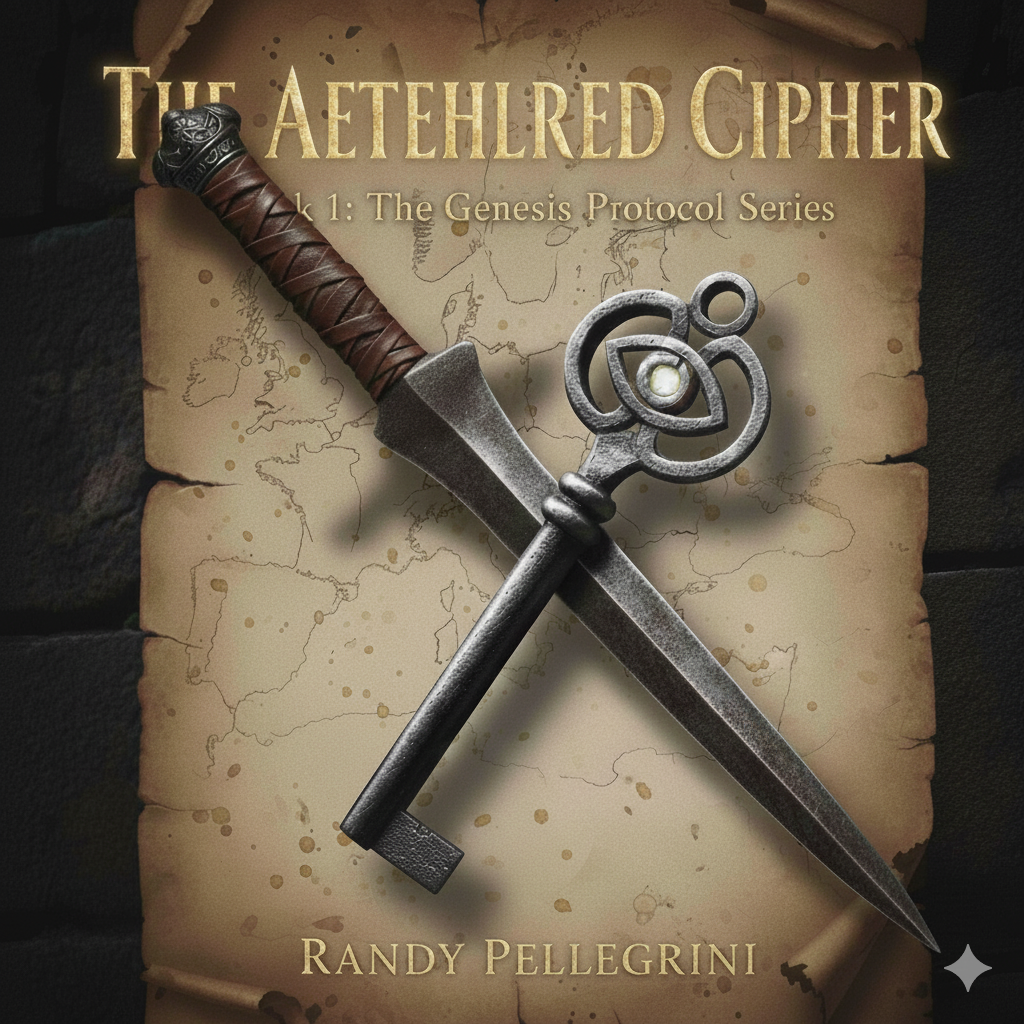
- Book 1: The Aethelred Cipher (1347 CE)
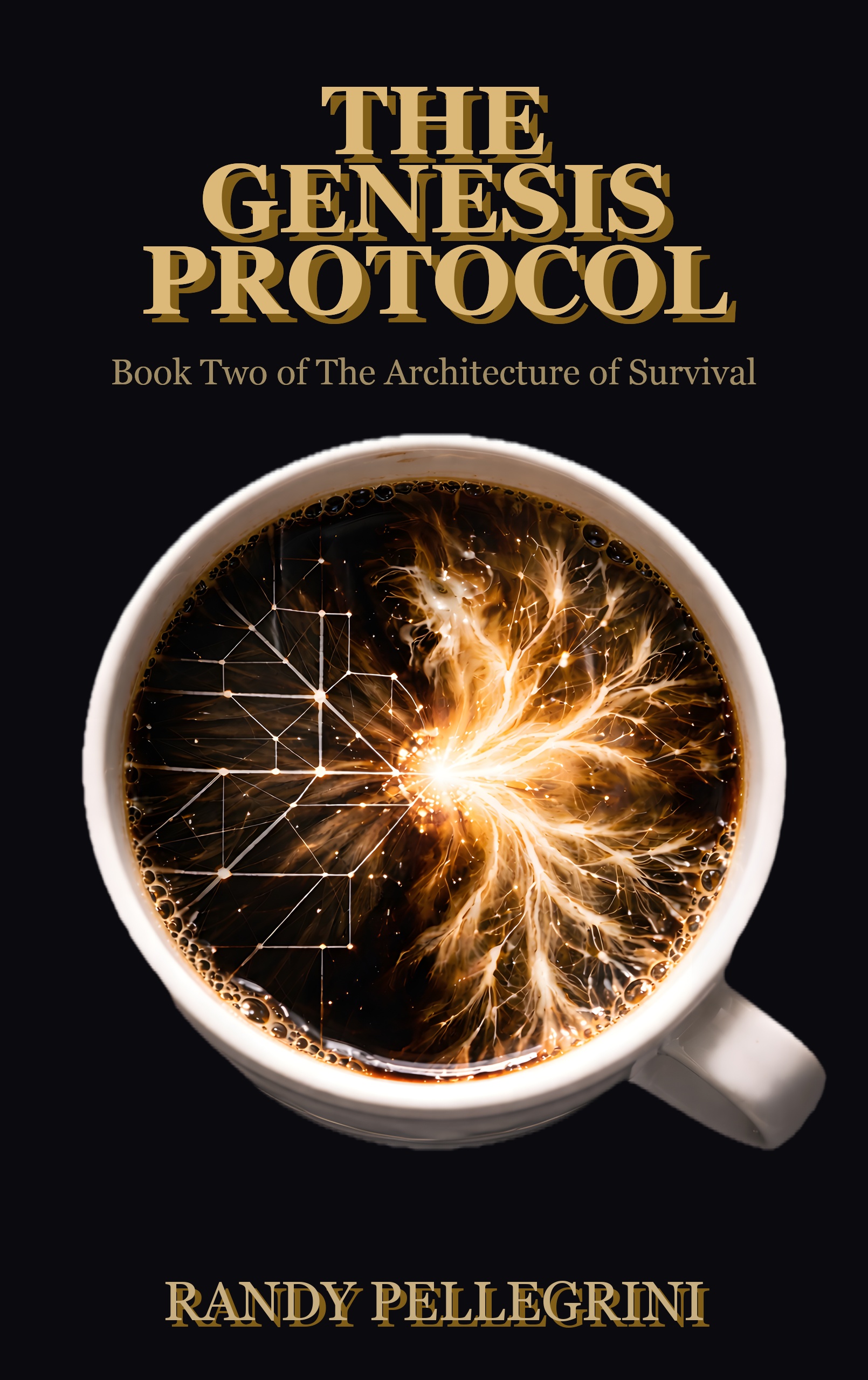
- Book 2: The Genesis Protocol (2019 CE)
- Book 3: The First Key (1177 BCE)
- Book 4: The Nazarene Protocol (26 CE)
- Books 5-12: As published
Chronological Order
Follow the networks from their founding to the final confrontation. Best for re-reads — you'll catch things you missed the first time.
- Book 3: The First Key (1177 BCE)
- Book 4: The Nazarene Protocol (26 CE)
- Book 1: The Aethelred Cipher (1347 CE)
- Book 2: The Genesis Protocol (2019 CE)
- Books 5-12: By time period
Prefer modern settings? Start with Book 2. A geneticist discovers an engineered bioweapon, escapes a building with forty-three seconds to spare, and spends the rest of the novel learning that a three-thousand-year-old conspiracy is the least of her problems.
The Saga So Far
Available Now
- Book 1: The Aethelred Cipher — ~78,000 words (Published on Amazon)
- Book 2: The Genesis Protocol — ~75,000 words (Published on Amazon)
In Development
- Books 3-12: Outlined and planned
- Estimated total saga: ~900,000 words across all 12 books