A pandemic thriller has two advantages no other thriller gets. The villain is invisible, and the clock is real. Every reader now knows what the first week of an outbreak feels like: the rumors, the official reassurance, the moment the numbers stop making sense.
The genre is older than most people think. Writers were imagining engineered plagues and escaped microbes decades before anyone had heard of gain-of-function research, and some of them got uncomfortably close to the truth.
I write bioterror fiction, so I've read the shelf. These are the ten that hold up.
Short answer: the best bioterror and pandemic thrillers are The Andromeda Strain by Michael Crichton, The Cobra Event by Richard Preston, The Stand by Stephen King, The White Plague by Frank Herbert and Outbreak by Robin Cook. For the most realistic engineered-virus plot, start with The Cobra Event.
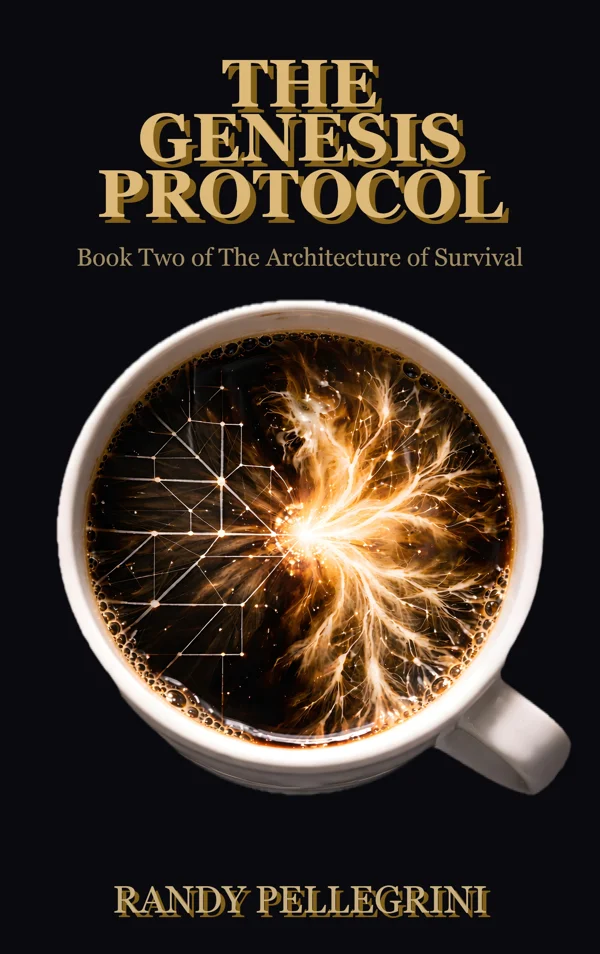
Full disclosure: I wrote #4, The Genesis Protocol, about a geneticist who finds an engineered bioweapon hidden inside a genetics company. It's free on Kindle Unlimited, and you can read the first chapter free. The other nine are here because they earned it.
1. The Andromeda Strain by Michael Crichton (1969)
A military satellite comes down near the town of Piedmont, Arizona, and within hours almost everyone in town is dead. Two survive: a sick old man and a crying baby. A team of scientists is sealed inside Wildfire, an underground lab built for exactly this, and given days to work out what came back with the satellite and why those two are still alive.
This is the book that invented the genre's grammar: the clinical procedure, the lab protocols, the sense that the science itself is the suspense. Crichton writes it like a classified after-action report, and more than fifty years later it still reads that way. Every pandemic thriller since owes it something.
2. The Cobra Event by Richard Preston (1997)
A teenage girl in New York dies violently in a classroom, and Dr. Alice Austen, a pathologist with the CDC, finds something in her brain that should not exist: an engineered virus built from pieces of others, designed to spread and to destroy the brain on the way. Someone is testing it on the city.
Preston wrote The Hot Zone, the nonfiction account of an Ebola scare outside Washington, and he brought the same reporting to this novel. The bioweapons history is real, the lab work is exact, and the result is frightening enough that Bill Clinton reportedly read it and pressed his staff about the country's readiness for a biological attack. If you want the most realistic engineered-virus plot on this list, start here.
3. The Stand by Stephen King (1978)
A weaponized flu escapes a military lab in California, and a guard runs. Within weeks, nearly everyone on earth is dead. The survivors drift across an empty America toward two very different camps, and the novel turns from a plague story into a story about what people build when everything is gone.
The first third, the outbreak itself, is as good as pandemic fiction gets: the spread from a gas station in Texas, the cover-up collapsing, the deaths told one ordinary person at a time. The back half goes somewhere the rest of this list doesn't, into faith and the shape of the new world. But the outbreak alone earns its place.
4. The Genesis Protocol by Randy Pellegrini (2026)
Mine. New Haven, 2019. Geneticist Sarah Chen reaches a source's house in the Connecticut woods and finds it burning, and what the source died protecting leads her to GenVault, a respected genetics company with an engineered bioweapon in its labs.
She gets out of the building with forty-three seconds to spare and an archive proving that THRESHOLD, a program to reduce the world's population by four billion, is real and already deployed. I wanted a bioterror thriller where the genetics holds up and the people behind the weapon have an argument you can't dismiss in a sentence. That last part is the hardest thing in the genre, and the thing I care about most.
5. The White Plague by Frank Herbert (1982)
John Roe O'Neill, an American molecular biologist, watches his wife and children die in a car bomb in Dublin. He disappears, and then a plague appears that kills only women. He targets the countries he blames, and the world has to decide what to do about a disease built to grieve on one man's behalf.
Herbert wrote Dune, and he brings the same interest in how systems react under pressure: governments, churches, scientists, families. The premise of a disease aimed at one kind of person was science fiction in 1982. It reads differently now that targeted genetics is a real research field, which is part of why I wrote about whether a bioweapon could target your DNA.
6. Outbreak by Robin Cook (1987)
Dr. Marissa Blumenthal, a young CDC investigator, is sent to a clinic in Los Angeles where patients are dying of Ebola. Then it happens again in another city, and another. The outbreaks don't behave like nature, and the closer Marissa gets to the reason, the more people in her own profession want her to stop.
Cook is a physician, and he built a career on the medical thriller. This is one of his best: the epidemiology is real, the CDC procedure is right, and the conspiracy grows from something believable, the money and politics inside medicine. It has no connection to the 1995 film of the same name.
7. Rainbow Six by Tom Clancy (1998)
John Clark runs a new multinational counterterrorism unit, and a series of strange attacks across Europe turns out to be cover for something far larger: a group of wealthy idealists with a plan to release an engineered virus at the Sydney Olympics and let it do the rest.
The book is long, and much of it is a military procedural, which you'll love or skim. But the villains are what make it worth reading here. They believe they are saving the planet, and Clancy gives them enough of an argument that it's uncomfortable. That kind of villain is the hardest to write, and the most frightening to read.
8. Inferno by Dan Brown (2013)
Robert Langdon wakes up in a Florence hospital with no memory of the last two days, and a trail of clues hidden in Dante's Inferno leads him toward a geneticist who believes overpopulation will end humanity, and who has built something to fix it.
The codes and art history are standard Langdon. What sets this one apart is the ending, which goes somewhere a lot of thriller writers wouldn't, and the geneticist, whose argument the book takes seriously. If you liked this, the books like Dan Brown list has more with the same hook and stronger research.
9. The Eyes of Darkness by Dean Koontz (1981)
A year after her son dies on a scout trip, Christina Evans starts getting messages that suggest he might be alive. The search leads her to a government facility and a biological weapon. In editions printed from 1989 on, the weapon is named Wuhan-400.
Koontz renamed it from the Soviet "Gorki-400" in the original edition, and the coincidence made this book briefly famous in 2020. Read it for what it is: a fast, frightening Koontz thriller about a mother who refuses to accept the official story, with a lab-made weapon at its center.
10. The Last Town on Earth by Thomas Mullen (2006)
Commonwealth, Washington, 1918. A mill town in the forest decides to wall itself off from the Spanish flu: guards on the only road, no one in, no one out. Then a cold, hungry soldier comes walking up the road, and the guards have to decide what the quarantine is worth.
There is no lab and no villain here, just the oldest public-health problem there is, and a town learning what it costs to keep people out. It is the closest thing to a historical novel on this list, and the best book I know about the moral weight of quarantine, which matters to anyone who lived through the last few years.
Why Pandemic Thrillers Work
Other thrillers need a villain you can see. A pandemic thriller works because the threat can't be seen or argued with, and it moves through ordinary life: a classroom, a gas station, a hospital waiting room. The best of these books understand that the virus is only the trigger. The real story is who knew, who covered it up, and who decided which lives counted.
That question, who decides who survives, sits under every book in my series, from the Black Death in 1347 to the modern labs of The Genesis Protocol.
Frequently Asked Questions
What is the best bioterror thriller?
Richard Preston's The Cobra Event is the most realistic bioterror thriller, built on the author's reporting on real biological weapons programs. Michael Crichton's The Andromeda Strain is the genre's classic, and Stephen King's The Stand is the most ambitious.
What novels are about an engineered virus or lab leak?
The Stand by Stephen King (a weaponized flu escapes a military lab), The Cobra Event by Richard Preston (an engineered virus released in New York), The White Plague by Frank Herbert (a plague designed to kill only women), Rainbow Six by Tom Clancy and Inferno by Dan Brown (engineered viruses meant to reduce the world's population), and The Genesis Protocol by Randy Pellegrini (a bioweapon developed inside a genetics company).
Which novel predicted the Wuhan virus?
Dean Koontz's The Eyes of Darkness (1981) features a biological weapon called Wuhan-400 in editions printed from 1989 on. The original edition called it Gorki-400. It is a coincidence of a renamed fictional weapon, not a prediction of COVID-19.
Is The Andromeda Strain about a virus?
Not exactly. The Andromeda Strain is about an extraterrestrial microorganism brought back to Earth by a military satellite, not a virus. It is still the founding novel of the outbreak thriller, and its lab-procedure style shaped the whole genre.