Genesis 34 gives Dinah one chapter and no lines. She goes out to visit the women of the land, a prince named Shechem takes her, and her brothers answer with a massacre. Then she disappears from the text. Anita Diamant read that chapter and asked the obvious question nobody had asked in print: what did Dinah think happened? The Red Tent came out in 1997 to small reviews and smaller sales. Diamant mailed copies to rabbis and reading groups, the reading groups did the rest, and four years later it was the book every book club in America had already done.
What readers found was not a retelling so much as a reversal. The tent where the women bleed and give birth and tell stories is the center of the world, and the patriarchs are the ones offstage. Shechem is the man Dinah chose. The brothers are the crime. And the whole thing is carried by the texture of ordinary work: bread, midwifery, the moon, the inheritance of recipes and grudges from mother to daughter.
I have a book in this tradition and I'll tell you where it sits. The ten below all share Diamant's method: take a woman the record mentions and dismisses, and trust that her ordinary life is the history.
1. The Book of Longings by Sue Monk Kidd (2020)
"I am Ana. I was the wife of Jesus." Kidd opens with the sentence and then earns it: Ana is the educated daughter of a scribe in Sepphoris, a few miles from Nazareth, with a hunger to write that no woman in Galilee is allowed to have. She marries a young builder from a nearby village, and the novel is the story of her own voice, not his.
This is the most direct heir to Diamant on the list, down to the aunt who tells the old stories and the ink that gets hidden. Kidd keeps Jesus at the edge of the frame and lets the women carry it. Read it for Ana's bowl of incantation and the scene in which she buries her writing in a cave; the Nag Hammadi echo is deliberate.
2. Circe by Madeline Miller (2018)
Homer gives the witch of Aiaia a few dozen lines and a reputation. Miller gives her a childhood in the halls of Helios, an exile, a workshop, a son, and a slow decision about what kind of power she is willing to hold. The men of the Odyssey pass through her island the way weather does.
Of everything here it has the biggest readership, and it deserves it. The prose is clear, the gods are petty in exactly the right way, and the center of gravity is a woman learning a craft in a house she built. If the midwifery chapters were your favorite part of The Red Tent, Circe's herbs and spells are the same pleasure.
3. The Dovekeepers by Alice Hoffman (2011)
Josephus says that when Masada fell in 73 CE, two women and five children survived by hiding in a cistern. Hoffman writes four women on the mountain in the months before: an assassin's daughter, a baker's widow, a warrior's girl raised as a boy, and a woman whose magic the rabbis want killed. Each narrates her section, each has a secret, and the siege closes over all of them.
It is long and it is lush, and some readers find Hoffman's prose too rich. I think the richness is the point. Nothing in the historical record cares about these women; the novel insists that the record is the thing that failed.
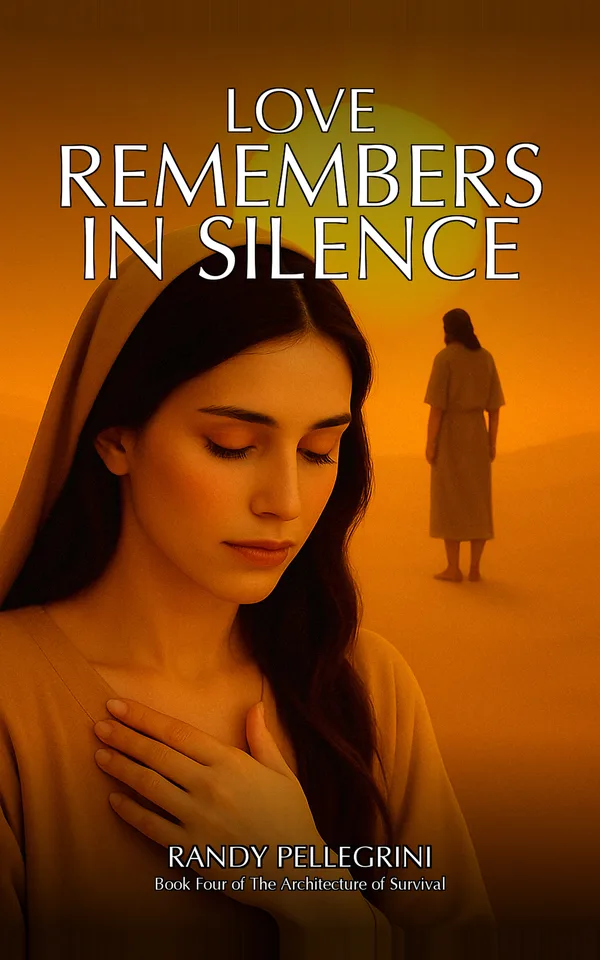
4. Love Remembers in Silence by Randy Pellegrini (2026)
Mine, and here is the Diamant in it.
Mary of Magdala gets more mentions in the gospels than most of the apostles, and the church spent fourteen centuries turning her into a prostitute she never was. Strip that away and what the texts actually show is a woman with money, a town's name attached to hers like a title, and a place at the cross when the men had run. I wrote her as what that evidence suggests: a merchant, a teacher, the one who organized the movement's women and kept it fed, in Roman Judea between 26 and 42 CE.
The love story at the center is the one the tradition could not say out loud, and the gospel she writes is the one the world would bury. The move is Diamant's: the woman the text mentions and dismisses turns out to be the one who was keeping the account. What I added is a thread that runs under the whole series, a chain of carriers who have held knowledge across civilizations, and Mary's recognition that she is part of something far older than the men around her understand.
5. The Secret Chord by Geraldine Brooks (2015)
David, told by Natan the prophet, who is sent to interview the people who knew the king before he was a king. The narrator is a man, so this is the one exception on the list, but the women he interviews are the book: Mikhal, the first wife, given away and taken back like a parcel; Batsheva, who did not get a choice; Tamar, whose chapter is the hardest thing Brooks has written.
Brooks uses the Hebrew names and the Hebrew texture, and she does not look away from what the Bible reports and then hurries past. If what you loved in Diamant was the sense that the text is hiding a crime in plain sight, this is the same sensibility turned on the most famous king in it.
6. Mary, Called Magdalene by Margaret George (2002)
George writes six-hundred-page lives of famous people, Henry VIII and Cleopatra among them, and this is her Mary. She grows up in Magdala in a fish-curing family, marries, is possessed by the seven demons Luke mentions, which George writes as literal, and follows the man who casts them out all the way to the end.
It is more devout than mine and more conventional than Kidd's, and the pacing is stately. But George did the work: the geography of Galilee, the fish trade, the law of divorce, the fear of a woman who talks to men who are not her husband. For a reader who wants the whole life laid out in order, this is the one.
7. Queenmaker by India Edghill (2002)
Michal, Saul's daughter, loved David when he was a shepherd with a harp, was married to him as a political prize, was given to another man when David fled, and was taken back years later when David needed Saul's blood in his house. Then she watched him become king. The Bible records that she despised him in her heart. Edghill tells you why.
Edghill self-published this in 1999 before St. Martin's picked it up, and it reads like a book someone needed to write. Her follow-up, Wisdom's Daughter, does the Queen of Sheba the same way.
8. The Silence of the Girls by Pat Barker (2018)
Briseis is the prize Achilles and Agamemnon fight over in the first lines of the Iliad. She is a queen whose city Achilles sacked and whose husband and brothers he killed, and she spends the poem as a possession. Barker gives her the narration and a voice like a slap: flat, furious, unimpressed by heroes.
This is the least comforting book on the list. There is no tent, no sisterhood of the moon. Barker's point is that the women in the camp were slaves, and she will not soften it. If Diamant's warmth is what you came for, go elsewhere; if her anger is, start here.
9. Sarah by Marek Halter (2004)
The first of Halter's Canaan trilogy, followed by Zipporah and Lilah. Sarah is a priestess's daughter in Ur who runs from an arranged marriage, meets a herdsman named Abram at the river, and chooses him. The barrenness, the journey, the business with Hagar: Halter tells all of it from inside her head.
Halter is a French novelist and the book was a bestseller there before it was translated. It is more romance than Diamant and lighter on the domestic texture, but it is doing the same thing with the same material, and it is a fast, generous read.
10. The Mists of Avalon by Marion Zimmer Bradley (1983)
Arthur, told by Morgaine, with the old religion and the women who kept it set against the Christian court that will write them out of the story. This is the book that showed a generation of writers the move Diamant made fourteen years later: take a story everyone knows, hand the narration to the women on its margins, and let the losing faith speak for itself.
Bradley's daughter's 2014 account of abuse has rightly changed how many readers feel about the author, and I understand anyone who leaves this one on the shelf. I'm listing the book for what it did to the form. Nearly every novel above it on this list owes it something.
What Diamant Actually Did
The trick of The Red Tent is not that it is about women. It is that Diamant treated the domestic record, birth and bread and blood and the stories told while grinding grain, as the history, and the kings and patriarchs as the weather it happened under. Once you have read a story that way you cannot unread it, and every one of the ten books above depends on that.
Mine takes the woman the gospels could not stop mentioning and could not bring themselves to explain, and asks what she was keeping.